

For this warmup assignment, we were asked to copy a storyboard of a cowboy at multiple angles. The article Learn the Lingo, Camera Shots & Techniques in Storyboarding talks about the importance of having different shots in the storyboard and knowing the names of them all. For this assignment, we focused on having an extreme long shot, long shot, knee shot, medium shot, and close-up. For the first storyboard, the cowboy was copied to a tee with the given template. For the next two, we were asked to create storyboards using animals and nature. I created a storyboard using a horse and used multiple types of shot angles to create my board. For the next board, I drew a tree using the multiple angles as well. As I began drawing each board, it became easier to draw the different angles. Through this process, I learned how crucial storyboarding is for a story and how sketching ahead of time helps bring the story to life.


For the event storyboard, we were required to create a storyboard of a fundraiser in groups. The storyboard had to show the visual experience of going to a fundraising event. Our group chose an organization for school supplies for kids in need. We decided the Kids in Need Foundation would be the best fit for our fundraiser. For this fundraiser, we wanted to create something formal that possible donors would be attracted to going to. We drew on sticky notes the various steps that people would view at the event. We included a check-in, raffle room, dining room with dancing, an auction, and display room. While thinking of the steps to put, I thought back to my own fundraising events I had gone to and the different attractions they hold. I realized having a sit-down dinner and an area to walk around it was important for the guests to experience. After our drawings, we went around to each of the groups and either approved or got rid of certain steps. The pictures above are of my refined fundraising storyboard. We were asked to individually look at the advice given and redraw our own storyboard. I used the feedback from the groups around the room and got rid of certain drawings. An example of this is with the dinner scene when many of the groups thought to show this step was unimportant. I refined the scene to show a close up look at the guests around the table eating dinner to make it clearer to the viewer the step that was going on. I continued to make sure enough details were present in each scene to help visualize the fundraising event.
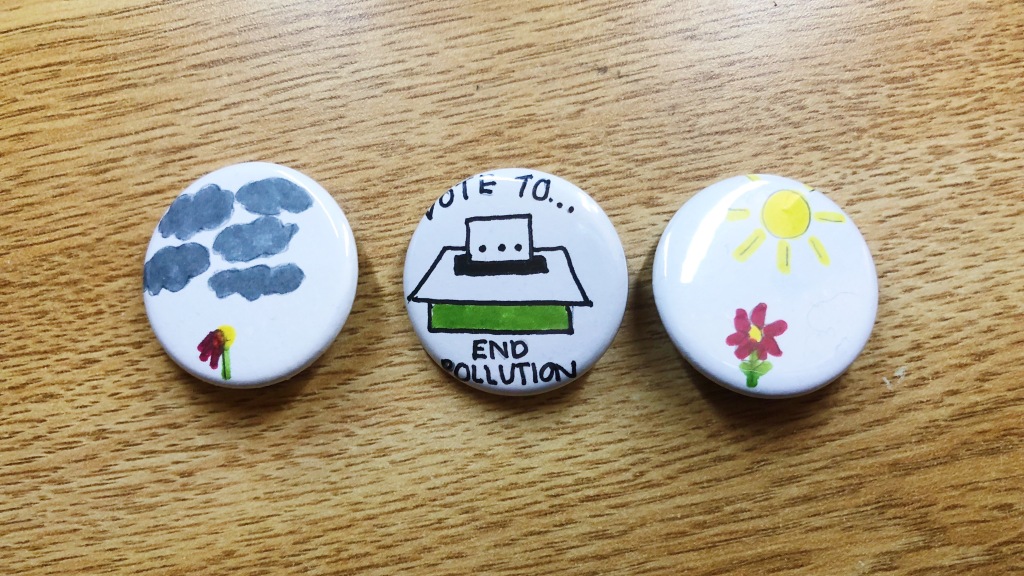
During this in class assignment, we used storyboarding in a different way. We created our own images to be placed on buttons and to tell a story at the same time. Our task was to use three buttons to tell the story of why someone should vote. First, I looked through a variety of issues and topics surrounding why someone should vote. I decided on using the topic of the environment and voting to help end pollution. I sketched out my ideas using three circles and eventually created my final three images to be pressed into buttons. The story shows a dying flower due to pollution, someone voting for a candidate who will help end pollution, and the world becoming pollution-free, with the flower thriving. This exercise shows how simple a story can be to get a big message across. The act of storyboarding can help in simplifying or explaining a process unfamiliar to other people. By going through this wide variety of activities, I was able to see the importance of storyboarding and why we use it.
#designresearch
 SHANNON'S DESIGN BLOG